
Blog
2015-10-08
This post also appeared on the Chalkdust Magazine blog. You can read the excellent second issue of Chalkdust here, including the £100 prize crossnumber which I set.
From today, the National Lottery's Lotto draw has 59 balls instead of 49. You may be thinking that this means there is now much less chance of winning. You would be right, except the prizes are also changing.
Camelot, who run the lottery, are saying that you are now "more likely to win a prize" and "more likely to become a millionaire". But what do these changes actually mean?
The changes
Until yesterday, Lotto had 49 balls. From today, there are 59 balls. Each ticket still has six numbers on it and six numbers, plus a bonus ball, are still chosen by the lottery machine. The old prizes were as follows:
| Requirement | Estimated Prize |
| Match all 6 normal balls | £2,000,000 |
| Match 5 normal balls and the bonus ball | £50,000 |
| Match 5 normal balls | £1,000 |
| Match 4 normal balls | £100 |
| Match 3 normal balls | £25 |
| 50 randomly picked tickets | £20,000 |
The prizes have changed to:
| Requirement | Estimated Prize |
| Match all 6 normal balls | £2,000,000 |
| Match 5 normal balls and the bonus ball | £50,000 |
| Match 5 normal balls | £1,000 |
| Match 4 normal balls | £100 |
| Match 3 normal balls | £25 |
| Match 2 normal balls | Free lucky dip entry in next Lotto draw |
| One randomly picked ticket | £1,000,000 |
| 20 other randomly picked tickets | £20,000 |
Probability of Winning a Prize
The probability of winning each of these prizes can be calculated. For example, the probability of matching all 6 balls in the new lotto is $$\mathbb{P}(\mathrm{matching\ ball\ 1})\times \mathbb{P}(\mathrm{matching\ ball\ 2})\times...\times\mathbb{P}(\mathrm{matching\ ball\ 6})$$ $$=\frac{6}{59}\times\frac{5}{58}\times\frac{4}{57}\times\frac{3}{56}\times\frac{2}{55}\times\frac{1}{54}$$ $$=\frac{1}{45057474},$$ and the probability of matching 4 balls in the new lotto is $$(\mathrm{number\ of\ different\ ways\ of\ picking\ four\ balls\ out\ of\ six})\times\mathbb{P}(\mathrm{matching\ ball\ 1})\times\\...\times\mathbb{P}(\mathrm{matching\ ball\ 4})\times\mathbb{P}(\mathrm{not\ matching\ ball\ 5})\times\mathbb{P}(\mathrm{not\ matching\ ball\ 6})$$ $$=15\times\frac{6}{59}\times\frac{5}{58}\times\frac{4}{57}\times\frac{3}{56}\times\frac{53}{55}\times\frac{52}{54}$$ $$=\frac{3445}{7509579}.$$ In the second calculation, it is important to include the probabilities of not matching the other balls to prevent double counting the cases when more than 4 balls are matched.
Calculating a probability for every prize and then adding them up gives the probability of winning a prize. In the old draw, the probability of winning a prize was \(0.0186\). In the new draw, it is \(0.1083\). So Camelot are correct in claiming that you are now more likely to win a prize.
But not all prizes are equal: these probabilities do not take into account the values of the prizes. To analyse the actual winnings, we're going to have to look at the expected amount of money you will win. But first, let's look at Camelot's other claim: that under the new rules you are more likely to become a millionaire.
Probability of winning £1,000,000
In the old draw, the only way to win a million pounds was to match all six balls. The probability of this happening was \(0.00000007151\) or \(7.151\times 10^{-8}\).
In the new lottery, a million pounds can be won either by matching all six balls or by winning the millionaire raffle. This will lead to different probabilities of winning on Wednesdays and Saturdays due to different numbers of people buying tickets. Based on expected sales of 16.5 million tickets on Saturdays and 8.5 million tickets on Wednesdays, the chances of becoming a millionaire on a Wednesday or Saturday are \(0.0000001398\) (\(1.398\times 10^{-7}\)) and \(0.00000008280\) (\(8.280\times 10^{-8}\)) respectively.
These are both higher than the probability of winning a million in the old draw, so again Camelot are correct: you are now more likely to become a millionaire...
But the new chances of becoming a millionaire are actually even higher. The probabilities given above are the chances of winning a million in a given draw. But if two balls are matched, you win a lucky dip: you could win a million in the next draw without buying another ticket. We should include this in the probability calculated above, as you are still becoming a millionaire due to the original ticket you bought.
In order to count this, let \(A_W\) and \(A_S\) be the probabilities of winning a million in a given draw (as given above) on a Wednesday or a Saturday, let \(B_W\) and \(B_S\) be the probabilities of winning a million in this draw or due to future lucky dip tickets on a Wednesday or a Saturday (the values we want to find) and let \(p\) be the probability of matching two balls. We can write $$B_W=A_W+pB_S$$ and $$B_S=A_S+pB_W$$ since the probability of winning a million is the probability of winning in this draw (\(A\)) plus the probability of winning a lucky dip ticket and winning in the next draw (\(pB\)). Substituting and rearranging, we get $$B_W=\frac{A_W+pA_S}{1-p^2}$$ and $$B_W=\frac{A_S+pA_W}{1-p^2}.$$
Using this (and the values of \(A_S\) and \(A_W\) calculated earlier) gives us probabilities of \(0.0000001493\) (\(1.493\times 10^{-7}\)) and \(0.00000009736\) (\(9.736\times 10^{-8}\)) of becoming a millionaire on a Wednesday and a Saturday respectively. These are both significantly higher than the probability of becoming a millionaire in the old draw (\(7.151\times 10^{-8}\)).
Camelot's two claims—that you are more likely to win a prize and you are more likely to become a millionaire—are both correct. It sounds like the new lottery is a great deal, but so far we have not taken into account the size of the prizes you will win and have only shown that a very rare event will become slightly less rare. Probably the best way to measure how good a lottery is is by working out the amount of money you should expect to win, so let's now look at that.
Expected prize money
To find the expected prize money, we must multiply the value of each prize by the probability of winning that prize and then add them up, or, in other words,
$$\sum_\mathrm{prizes}\mathrm{value\ of\ prize}\times\mathbb{P}(\mathrm{winning\ prize}).$$
Once this has been calculated, the chance of winning due to a free lucky dip entry must be taken into account as above.
In the old draw, after buying a ticket for £2, you could expect to win 78p or 83p on a Wednesday or Saturday respectively. In the new draw, the expected winnings have changed to 58p and 50p (Wednesday and Saturday respectively). Expressed in this way, it can be seen that although the headline changes look good, the overall value for money of the lottery has significantly decreased.
Looking on the bright side, this does mean that the lottery will make even more money that it can put towards charitable causes: the lottery remains an excellent way to donate your money to worthy charities!
 ×2 ×2 ×2 ×2 ×2
(Click on one of these icons to react to this blog post)
You might also enjoy...

Comments
Comments in green were written by me. Comments in blue were not written by me.
Add a Comment
2014-06-21
With World Cup fever taking over, you may have forgotten that Wimbledon is just a few days away.
Tennis scoring
Tennis matches are split into sets (three sets for ladies' matches, five sets for men's), which are in turn split into games. The players take it in turns to serve for a game. The scoring in a game is probably best explained with a flowchart (click to enlarge):
)
To win a set, a player must win at least six games and two more games than their opponent. If the score reaches six games all, then a tie break is played. In this tie break, the first player to win at least seven points and two points more than their opponent wins. In the final set there is no tie break, so matches can last a long time.
Winning with the smallest share of points
Due to the way tennis is split into sets and games, the player who wins the most points will not necessarily win the match. This got me thinking: what is the smallest proportion of points which can be won while still winning the tennis match?
First, let's consider a men's match. In order to win with the lowest proportion of points, our player should let his opponent win two sets without winning a point and win the other three sets. In the two lost sets, the opponent should win 0-6 taking every point: in total the opponent will win 48 points in these sets.
Leaving the final set for now, the other two sets are won by our player. To win these with the smallest proportion of the points, they should be won 7-6 on a tie break. In the 6 lost games, the opponent should take all the points. In the won games and the tie break, our player should win by two points with the lowest total score. (Winning with more than the lowest total score will mean both players win an equal number of extra points, moving the proportion of points our player wins closer to 50%, higher than it needs to be.)
Therefore, our player will win 4 points out of 6 in the games he wins, win 0 out of 4 points in the games he loses and wins the tie break 7 points to 5. This means that in total our player will 62 points out of 144 in the two won sets.
For the same reason as above, the final set should be won with the lowest total score: 6-4. Using the same scores for each game, our player wins 24 points out of 52.
Overall, our player has won 86 points out of 244, a mere 35% of the points.
If the match is a ladies' match then the same analysis will work, but with each player winning one less set. This gives our player 55 points out of 148, 37% of the points.
This result demonstrates why tennis remains exciting through the whole match. The way tennis is split into sets and games means that our opponent can win 65% of the points but if the pressure gets to them at the most important points, our player can still win the match. This makes for a far more interesting competition than a simple race to one hundred points which could quickly become a foregone conclusion.
Comparing players with serving stats
During tennis matches, players are often compared using statistics such as the percentages of serves which are successful. Imagine a match between Player A and Player B.
In the first set, Player A and Player B are successful with 100% and 92% of their serves respectively. In the second set, these figures are 56% and 48%. Player A clearly looks to be the better server, as they have a higher percentage in each set. However if we look at the two sets in more detail:
| Player A | Player B | |
| First Set | 20/20 | 67/73 |
| Second Set | 45/80 | 13/27 |
| Total | 65/100 | 80/100 |
Table showing successful serves/total serves.
Overall, Player B has an 80% serve success rate, while Player A only manages 65%.
This is an example of Simpson's paradox: a trend which appears in the set-by-set data disappears when the data is combined. This occurs because when we look at the set-by-set percentages, the total number of serves is not taken into account: Player A served more in the second set so their overall percentage will be closer to 56%; Player B served more in the first set so their overall percentage will be closer to 92%.
×1 ×1 ×1 ×1 ×2(Click on one of these icons to react to this blog post)
You might also enjoy...



Comments
Comments in green were written by me. Comments in blue were not written by me.
@nope: Congratulations on being the first person in 12 years to spot that! I don't think I have the original file for that flowchart, so it may take me a little bit of time to correct it...
Matthew
flowchart has an issue with it. if it's 40-30 and server scores, he wins. it doesn't go to advantage
same with 30-40. if server loses the point, he loses the game.
same with 30-40. if server loses the point, he loses the game.
nope
Add a Comment
2014-05-26
With the FIFA World Cup approaching, sticker fans across the world are filling up their official Panini sticker books. This got me wondering: how many stickers should I expect to need to buy to complete my album? And how much will this cost?
How many stickers?
There are 640 stickers required to fill the album. The last 100 stickers required can be ordered from the Panini website.
After \(n\) stickers have been stuck into the album, the probability of the next sticker being the next new sticker is:
$$\frac{640-n}{640}$$
The probability that the sticker after next is the next new sticker is:
$$\frac{n}{640}\frac{640-n}{640}$$
The probability that the sticker after that is the next new sticker is:
$$\left(\frac{n}{640}\right)^2\frac{640-n}{640}$$
Following this pattern, we find that the expected number of stickers bought to find a new sticker is:
$$\sum_{i=1}^{\infty}i \left(\frac{640-n}{640}\right) \left(\frac{n}{640}\right)^i = \frac{640}{640-n}$$
Therefore, to get all 640 stickers, I should expect to buy:
$$\sum_{n=0}^{639}\frac{640}{640-n} = 4505 \mbox{ stickers.}$$
Or, if the last 100 stickers needed are ordered:
$$\sum_{n=0}^{539}\frac{640}{640-n} + 100 = 1285 \mbox{ stickers.}$$
How much?
The first 21 stickers come with the album for £1.99. Additional stickers can be bought in packs of 5 for 50p or multipacks of 30 for £2.75. To complete the album, 100 stickers can be bought for 25p each.
If I decided to complete my album without ordering the final stickers, I should expect to buy 4505 stickers. After the 21 which come with the album, I will need to buy 4484 stickers: just under 897 packs. These packs would cost £411.25 (149 multipacks and 3 single packs), giving a total cost of £413.24 for the completed album.
I'm not sure if I have a spare £413.24 lying around, so hopefully I can reduce the cost of the album by buying the last 100 stickers for £25. This would mean that once I've received the first 21 stickers with the album, I will need to buy 1164 stickers, or 233 packs. These packs would cost £107 (38 multipacks and 5 single packs), giving a total cost of £133.99 for the completed album, significantly less than if I decided not to buy the last stickers.
How many should I order?
The further reduce the number of stickers bought, I could get a friend to also order 100 stickers for me and so buy the last 200 stickers for 25p each. With enough friends the whole album could be filled this way, although as the stickers are more expensive than when bought in packs, this would not be the cheapest way.
If the last 219 or 250 stickers are bought for 25p each, then I should expect to spend £117.74 in total on the album. If I buy any other number of stickers at the end, the expected spend will be higher.
Fortunately, as you will be able to swap your duplicate stickers with your friends, the cost of a full album should turn out to be significantly lower than this. Although if saving money is your aim, then perhaps the Panini World Cup 2014 Sticker Book game would be a better alternative to a real sticker book.
×3 ×3 ×3 ×4 ×3(Click on one of these icons to react to this blog post)
You might also enjoy...
Comments
Comments in green were written by me. Comments in blue were not written by me.
Add a Comment
2014-03-29
Following my last post, I wrote to my MP (click to enlarge):
)
Today I received this reply (click to enlarge):
)
I'm excited about hearing what the Treasury has to say about it...
(Click on one of these icons to react to this blog post)
You might also enjoy...

Comments
Comments in green were written by me. Comments in blue were not written by me.
Add a Comment
2014-03-19
Vending machines identify coins by measuring their width. Circular coins have the same width in every direction, so designers of vending machines do not need to worry about incorrectly rotated coins causing a blockage or being misidentified. But what about seven-sided 20p and 50p coins?
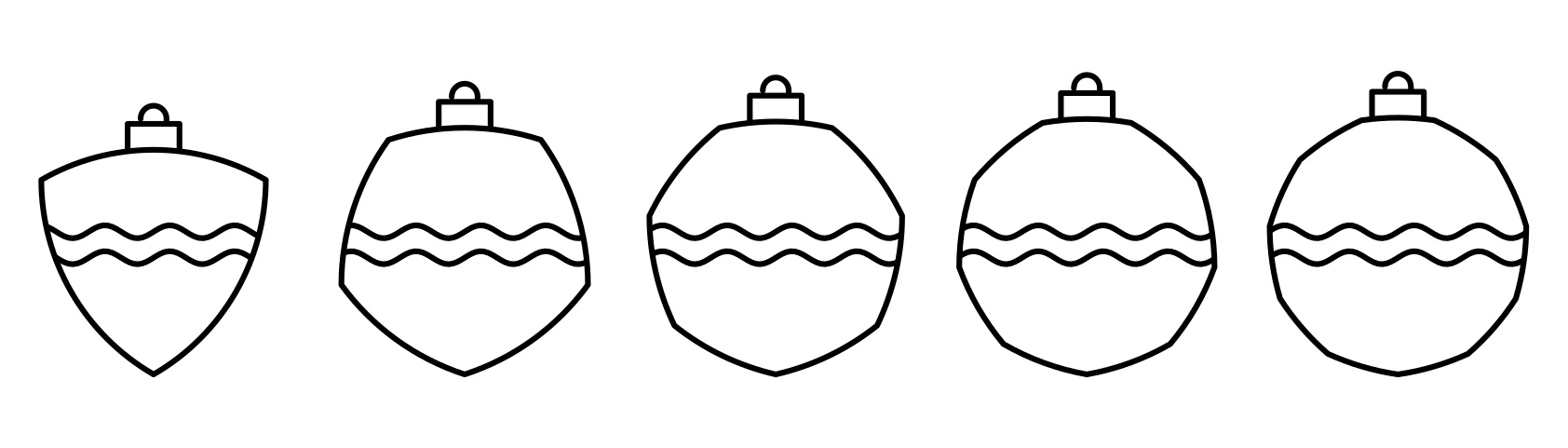
Perhaps surprisingly, 20p and 50p coins also have a constant width, as show by this video. In fact, the sides of any regular shape with an odd number of sides can be curved to give the shape a constant width.
)
3, 5, 7 and 9 sided shapes of constant width.
Today, a new 12-sided £1 coin was unveiled. One reason for the number of sides was to make the coin easily identified by touch. However, as only polygons with an odd number of sides can be made into shapes of constant width, this new coin will have a different width when measured corner to corner or side to side. This could lead to vending machines not recognising coins unless a new mechanism is added to correctly align the coin before measuring.
Perhaps an 11-sided or 13-sided design would be a better idea, as this would be easily distinguishable from other coins by touch which being a constant width to allow machines to identify it.
(Click on one of these icons to react to this blog post)
You might also enjoy...

Comments
Comments in green were written by me. Comments in blue were not written by me.
Add a Comment